Highlights

The future isn’t something to predict. It’s something to prepare for.
Futures Thinking helps designers explore multiple plausible realities before committing to today's decisions.
Healthcare is bigger than healthcare.
Designing better care means designing across homes, schools, communities, technology, and public systems.
Signals matter more than certainty.
Small shifts happening today often reveal the forces shaping tomorrow.
One future deserves many possibilities.
Designing against multiple scenarios creates solutions that are more resilient, adaptable, and human.
Sometimes the best prototype starts with Lego.
Making ideas tangible helps teams think differently about complex problems. Prototypes don't predict what will happen. They help us ask better questions about what could happen.
Designing for a Future That Refuses to Sit Still
Designers spend much of their time solving today's problems. But what happens when the problem itself is changing? Like healthcare, which has a habit of changing just as we've figured out how to improve it.
New technologies emerge. Populations age. Expectations shift. Policies change. Then AI shows up and politely asks everyone to rethink the plan.
For designers, that presents an uncomfortable question.
How do you design for a future that hasn't happened yet?
That question shaped the latest DesignMeets event, where participants traded panel discussions for pipe cleaners, scenarios, and speculative thinking to explore one of design's biggest challenges: how do you design for a healthcare system that doesn't yet exist?
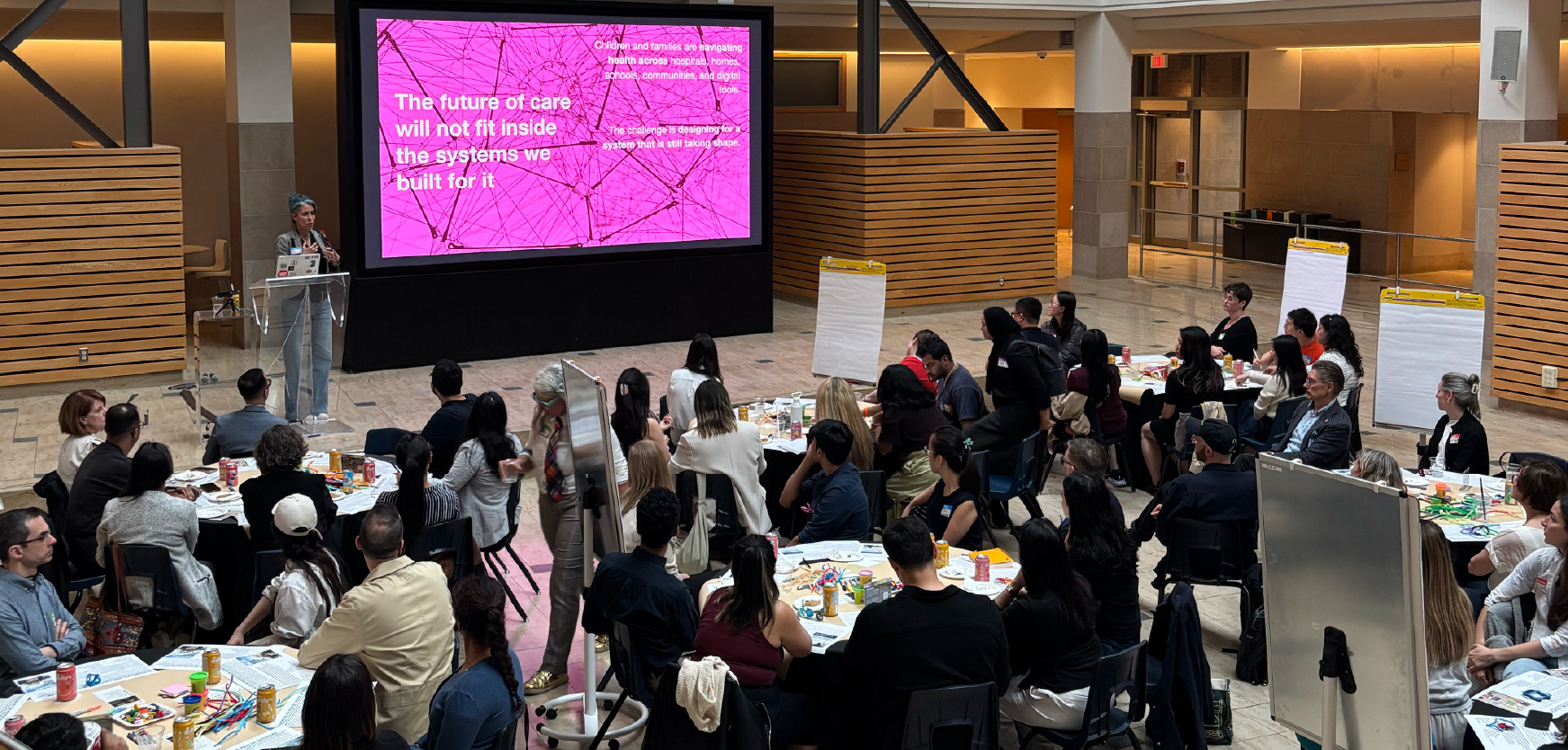
Hosted at the Rotman School of Management in partnership with the Business Design Initiative, Designing for Healthcare Futures invited participants to think beyond incremental improvements and consider the broader forces reshaping care. Rather than asking how healthcare works today, the workshop asked a more provocative question: How might we design more human and equitable experiences of care for children and families as healthcare evolves across hospitals, homes, schools, communities, and digital systems?
It's the kind of question that resists quick answers. Which, perhaps, is exactly the point.
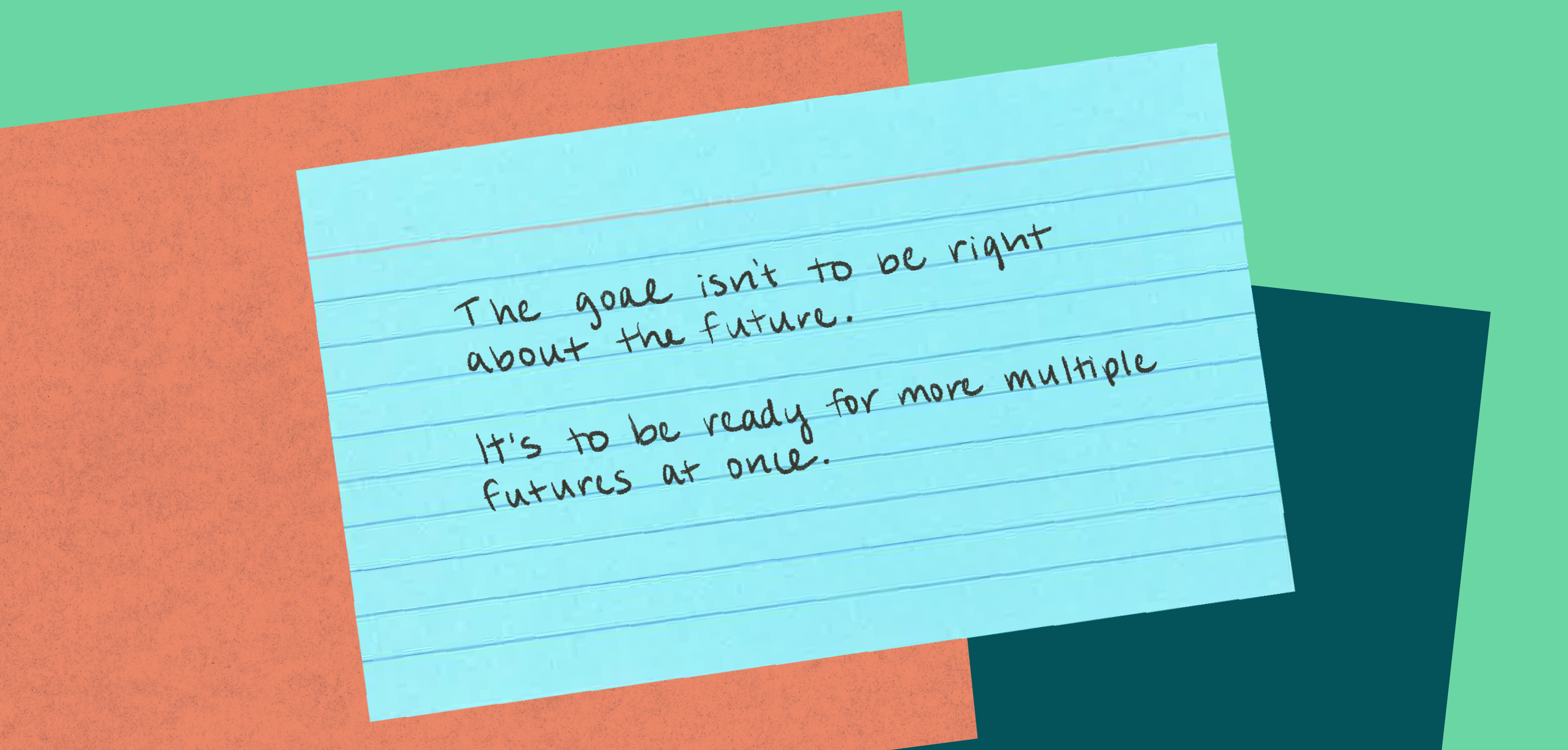
Emma Aiken-Klar, Academic Director of the Rotman Business Design Initiative, introduced participants to Futures Thinking, not as an exercise in prediction, but as a disciplined way of preparing for uncertainty.
"We're not here to be able to predict," she explained. "We're here to prepare."
It's a deceptively simple distinction.
Design, she noted, is remarkably good at solving problems we can already see. Futures Thinking asks designers to consider the ones we can't. "Design is fantastic at solving for what we can observe and understand today. Futures Thinking is fantastic for navigating what we don't know yet about tomorrow."
Taken together, the two disciplines become less about forecasting and more about expanding possibilities.
Or, as Emma described it with admirable honesty, "It's like a peanut butter cup."
Not the metaphor anyone expected from a discussion about healthcare futures. Quite possibly the one everyone remembered.
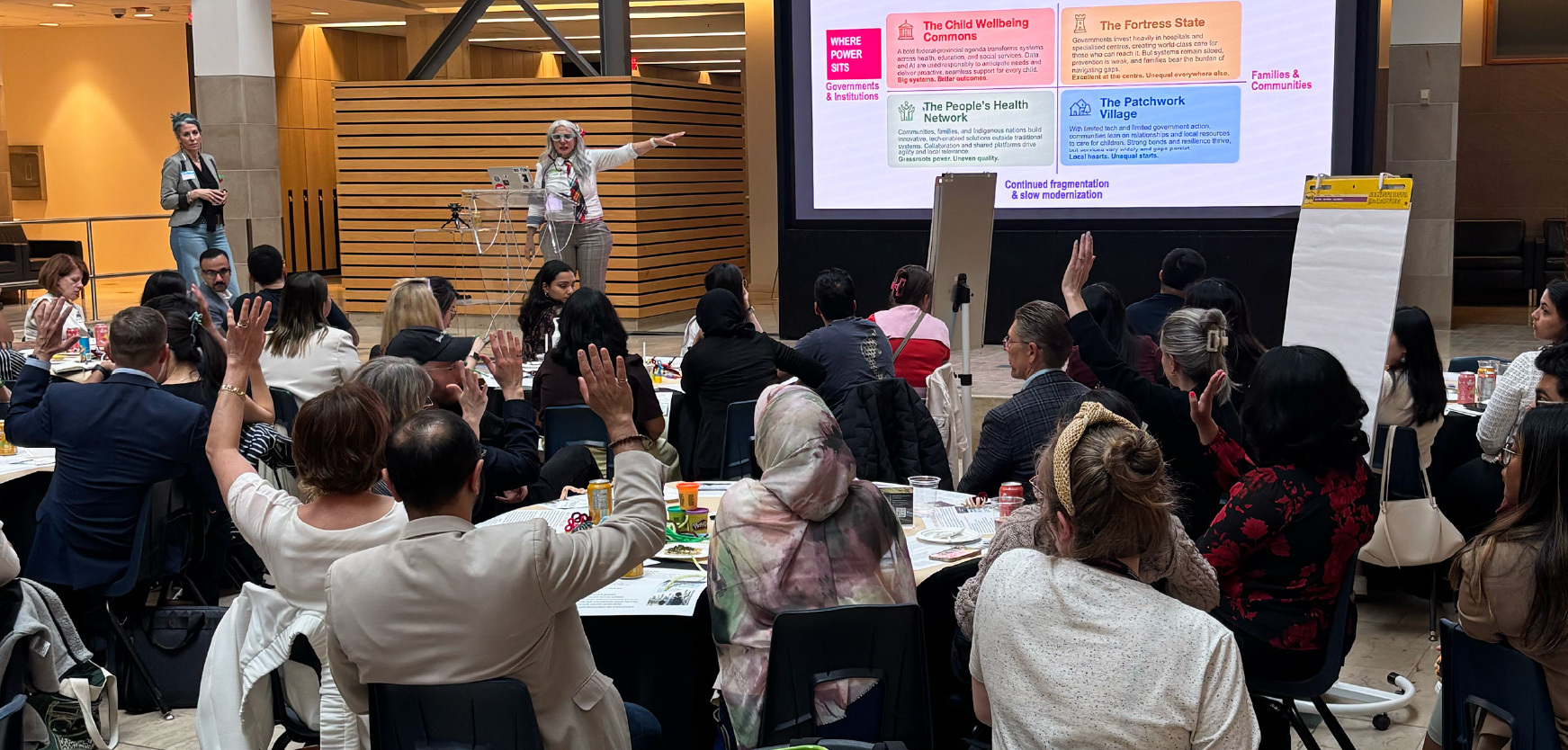
Health futurist Zayna Khayat then demonstrated what that thinking looks like in practice.
Using signals ranging from artificial intelligence to changing models of care and philanthropy, she showed how seemingly isolated trends often point toward larger systemic shifts. The objective wasn't to identify the future. It was to identify several plausible futures and explore how each might reshape healthcare.
That subtle shift changes everything. Rather than asking whether an idea will work, designers begin asking under what conditions it would work, and what would need to change if those conditions evolve.
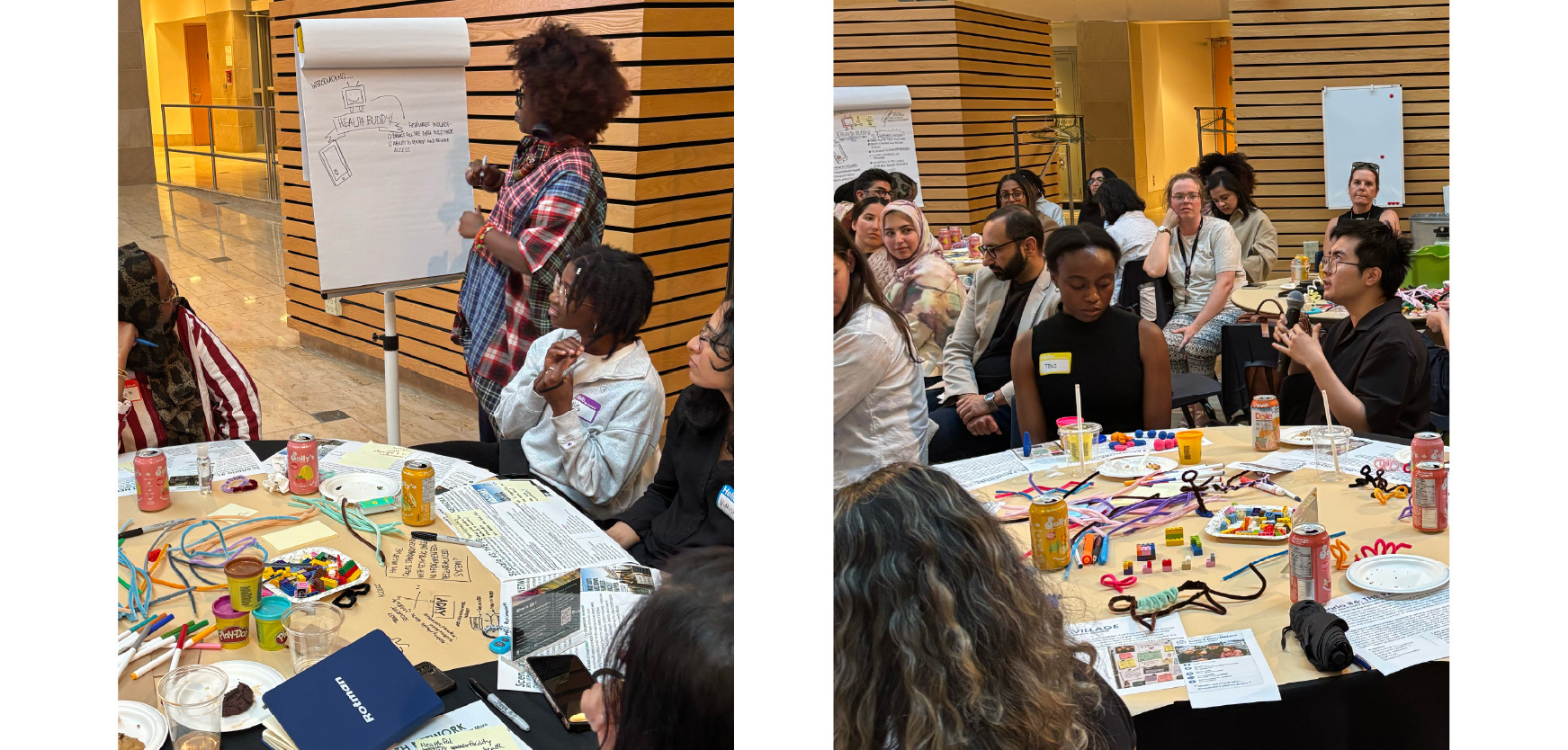
Participants then put the methodology to work. Working in teams, they explored four distinct healthcare scenarios for 2035, developing concepts for children and families before testing those ideas against different social, technological, and economic realities.
What emerged wasn't a collection of polished solutions.
It was something arguably more valuable.
Better questions.
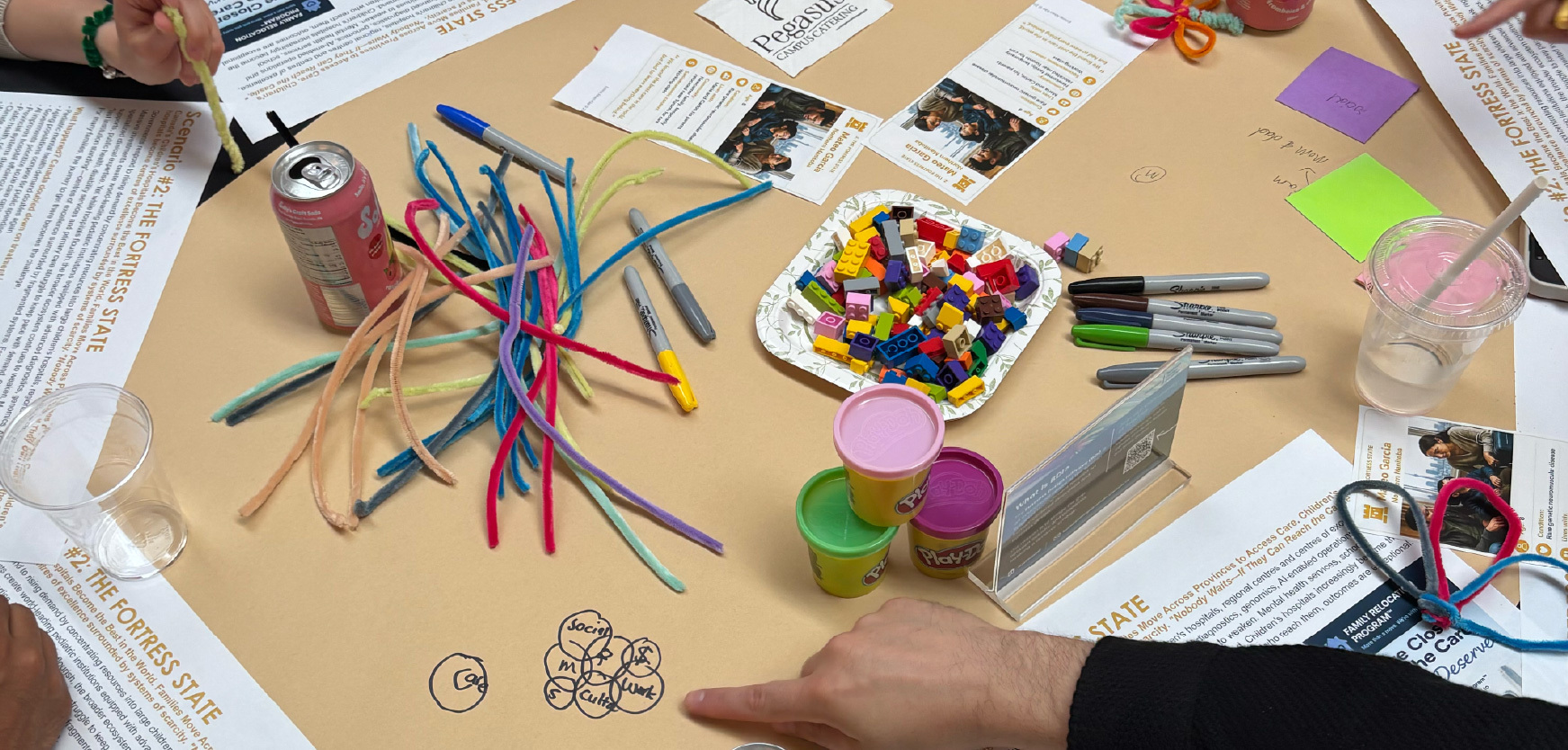
There was also something quietly reassuring about the materials spread across the tables.
Markers. Lego. Pipe cleaners. Sticky notes.
In an era where almost every creative conversation eventually arrives at AI, it was refreshing to watch a room full of designers rediscover that thinking with your hands is still remarkably effective. Sometimes a slightly lopsided Play-Doh model reveals more than a beautifully rendered concept ever could.
Running through the evening was a broader lesson about the changing role of design itself.
Designers are increasingly being asked to work inside systems that refuse to stand still. Healthcare is one of them. Climate is another. Education. Housing. Public policy. None offer the luxury of fixed conditions.
Complex systems rarely move in straight lines. They evolve through interconnected decisions, competing priorities, and unexpected disruptions. Designing for that reality requires more than empathy and creativity. It requires the ability to imagine several futures at once, and the humility to accept that none of them may unfold exactly as expected.
The future, after all, isn't waiting for designers to predict it. It's waiting for them to help shape it.
Which means designing for today is no longer enough. The challenge is learning to design for change itself.
About DesignMeets™
Proudly sponsored by Pivot Design Group, DesignMeets is a series of social events where the design community can connect, collaborate, and share ideas. Join us at a DesignMeets event to network, learn, and be inspired.
Sign up for our newsletter to stay in the loop.
Sponsors